My Neighborhood Has a Secret Victorian Undercity and I Have the Wikipedia Tabs to Prove It
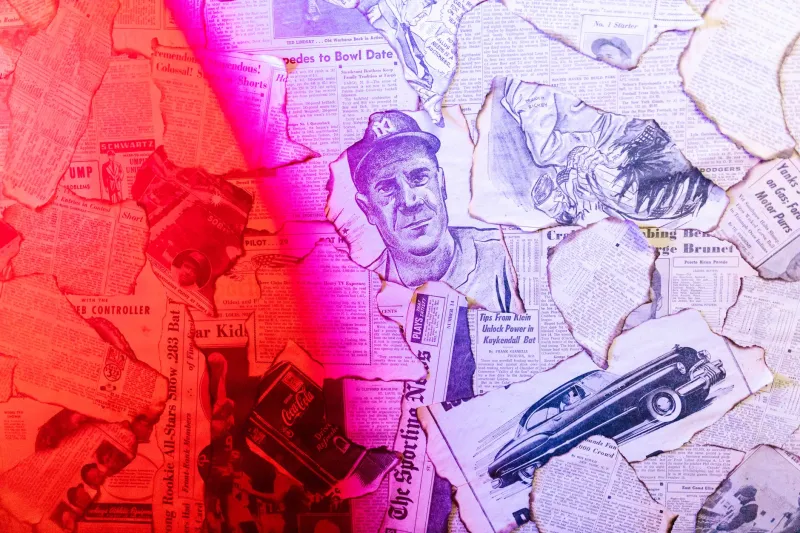
It started, as most beautiful disasters do, with a single Wikipedia article.
For Marcus T., a 34-year-old graphic designer in Cleveland, it was a stub page about a streetcar line that stopped running in 1953. For Priya, a grad student in Chicago, it was a footnote about a hotel that burned down in 1911 and was never rebuilt. For a guy who goes by "Tunnelsworth" on Reddit (more on him later), it was a blurry photograph of a subway station that doesn't appear on any current map.
Three clicks in, they were gone. Not just down a rabbit hole — through it, into an elaborate personal mythology they're still building today.
The Wikipedia-to-Delusion Pipeline Is Very Real and Very Relatable
Here's the thing about local history: it's full of gaps. Buildings get demolished. Records get lost. City planners make decisions that are never fully explained to the public, probably because the explanation is embarrassing or involves someone's cousin getting a contract. These gaps aren't bugs in the historical record — for a certain type of person, they're invitations.
"I found a reference to a neighborhood called 'Ashfield' in a 1903 city directory," Marcus explains, slightly too fast, like he's been waiting for someone to ask. "It doesn't exist anymore. There's no Wikipedia page for it. There's almost nothing. So I just... started filling it in."
What began as idle curiosity is now a 200-page Google Doc. Ashfield, in Marcus's telling, was a working-class neighborhood with a thriving Czech immigrant community, a brewery that was quietly the best in Ohio, and a city councilman who may or may not have been running a very sophisticated horse-racing numbers operation. None of this is confirmed. Some of it is probably false. Marcus knows this. He has kept going anyway.
"It's not lying," he says, firmly. "It's plausible extrapolation."
The Taxonomy of the City Mythologist
Spend enough time in local history forums, niche subreddits, and the comment sections of municipal archive Instagram accounts (yes, these exist, yes, they are extremely online) and you start to notice a few distinct archetypes among the alternate-history crowd.
The Infrastructure Obsessive is fixated on transit systems, tunnels, and anything underground. They have opinions about the Second Avenue Subway that predate their own birth. They believe, with religious conviction, that their city's current subway map is a pale shadow of what could have been — and they have a hand-drawn alternative ready to show you.
The Neighborhood Nostalgist mourns places they never lived in, for people they never knew. They've named streets in their fictional version of 1940s Brooklyn. They refer to demolished buildings in the present tense. They are, emotionally speaking, a haunted house in human form.
The Conspiracy Cartographer thinks the real history is being suppressed — not by shadowy elites, necessarily, but by indifferent city planners and underfunded historical societies. Their Wikipedia edits get reverted regularly. They consider this proof.
And then there's Tunnelsworth.
Tunnelsworth and the Phantom Stations
Tunnelsworth — who agreed to be interviewed but declined to share his real name, his city, or "which subway system specifically, for reasons" — has spent three years documenting what he calls "the ghost network."
The ghost network is, in his telling, a series of subway stations that were built, briefly used, and then quietly removed from official records sometime in the 1960s. His evidence includes: a photograph of a tiled wall that doesn't match any existing station's aesthetic, a transit worker's diary entry referencing a "lower platform" that has no corresponding infrastructure, and a city council meeting transcript from 1962 that references "the eastern extension" without further elaboration.
"The eastern extension goes somewhere," Tunnelsworth says.
When pressed on whether the eastern extension might just be a road project, he pauses for a long time.
"It goes somewhere interesting," he amends.
His forum posts on the subject run to tens of thousands of words. He has followers. Some of them have started their own investigations in their own cities. The ghost network is, at this point, less a theory and more a genre.
Why This Is Actually Kind of Beautiful (Stay With Me)
It would be easy to write these people off as eccentrics with too many browser tabs open — and to be clear, they absolutely are that. But there's something genuinely moving about what they're doing, even when it tips into mild delusion.
American cities are full of erasures. Neighborhoods bulldozed for highways. Communities displaced and dispersed. Buildings demolished before anyone thought to photograph them. Official history has a way of smoothing over the weird, the marginal, and the inconvenient, leaving behind a version of events that's tidier but also kind of boring.
The Wikipedia rabbit-hole historians aren't just making stuff up. They're asking what if someone had paid attention? What if the streetcar line had survived? What if Ashfield had been preserved instead of paved over? What if there's a tiled wall down there that nobody's looked at in sixty years?
Priya, the Chicago grad student, puts it this way: "Official history is basically a highlights reel. I'm interested in the deleted scenes."
Her current project involves reconstructing the social life of a single Chicago block between 1895 and 1930, using census records, church directories, and — she admits this freely — "some educated guessing about what the people who lived there were probably arguing about." It's part history, part fiction, part something that doesn't have a name yet.
"My advisor thinks it's a methodology problem," she says. "I think it's a new methodology."
The Line Between Research and Roleplay Is a Dotted One
None of these people think their alternate histories are real, exactly. But they also don't entirely think they're fake. They exist in a productive middle zone — part creative writing exercise, part genuine historical inquiry, part extremely elaborate coping mechanism for living in cities that change faster than anyone can process.
Marcus has started leaving small handmade plaques near the area where Ashfield used to be. They reference historical events that didn't happen, in the style of official historical markers. So far, nobody has removed them.
"Someone left a flower at one of them last week," he says. "I don't know if they thought it was real or if they were in on the joke. Either way, it felt right."
That, honestly, is the whole thing. The joke and the sincerity aren't opposites here. The rabbit hole and the mythology it produces are both the point. Your city has a secret Victorian undercity. The eastern extension goes somewhere interesting. Ashfield had a really good brewery.
You can't prove it didn't.