This Orchid Has Seen My Darkest Moments and It Still Won't Bloom
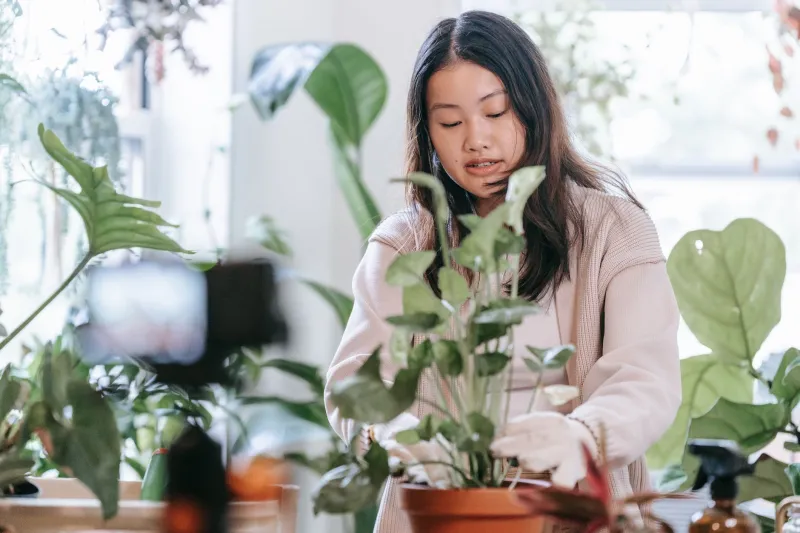
Let me paint you a picture. It's 11 p.m. on a Tuesday. You're crouched on your bathroom floor with a spray bottle, a digital thermometer, and a very specific brand of distilled water that you drove twenty minutes to find, trying to recreate the microclimate of a Thai rainforest for a plant that cost you more than your last pair of shoes. The orchid — let's call her Brenda — stares back at you with the energy of a disappointed professor. She has not bloomed in six months. She will not bloom tonight. She may never bloom again.
And yet? You're obsessed. Completely, embarrassingly, financially committed.
This is the world of difficult houseplants, and it is thriving.
The $400 Question
It started, as most modern obsessions do, on TikTok. Somewhere between a video of someone unboxing a variegated Monstera albo and a fifteen-second clip of a man weeping over a crispy Alocasia, an entire subculture quietly took root (sorry). Plant influencers — people like @terraplantmom and @difficultgreens — have built followings in the hundreds of thousands not by showing off perfect, lush shelfies, but by documenting spectacular, operatic plant failures.
The content is oddly compelling. A timelapse of a String of Pearls going from plump and gorgeous to absolutely tragic in the span of four days. A thread on r/plantclinic where someone's fiddle leaf fig has developed what appears to be seventeen different problems simultaneously. The comments aren't cruel — they're communal. I've been there. Mine did the same thing. Did you check the drainage?
This is the paradox at the heart of difficult plant culture: the plants that are hardest to keep alive are the ones people want most.
Why We Do This to Ourselves
Plant psychologists — yes, that's a thing people are now consulting — suggest that the appeal of a genuinely challenging plant is rooted in something deeper than masochism. "There's a real satisfaction in earning something," says one online plant community moderator who goes by the handle PeatMossPhilosopher. "Easy plants are great, but they don't need you. A Paphiopedilum orchid? That thing is completely dependent on you getting like eight variables right simultaneously. When it finally produces a new leaf, it feels like a genuine achievement."
There's also, if we're being honest, a status component. Rare, temperamental plants have become the houseplant equivalent of a limited-edition sneaker drop. A healthy, variegated Philodendron gloriosum or a thriving Nepenthes pitcher plant signals something to the community: this person has done the research. This person has suffered and persisted. Respect.
A Brief, Humbling Field Guide
For the uninitiated, here is an extremely incomplete guide to the most reliably humbling plants currently breaking hearts across America:
The Fiddle Leaf Fig — The original villain of the houseplant world. Hates drafts. Hates direct sun. Hates being moved. Hates you, specifically, for reasons it will not explain. Will drop every single leaf if you repot it on the wrong day of the week (this is only slightly an exaggeration).
Carnivorous Plants (Venus Flytraps, Sundews, Pitcher Plants) — These require rainwater or distilled water exclusively, acidic soil with zero nutrients, and specific dormancy periods that will feel, emotionally, like you are abandoning them. They are also extremely cool and you will buy one anyway.
The Maidenhair Fern — Looks like a fairy lives in it. Requires humidity levels that essentially demand you install a small greenhouse in your apartment. Will go from lush and ethereal to a pile of crispy sadness in approximately forty-eight hours if you look away.
Lithops (Living Stones) — Tiny, bizarre, looks like a rock with a personality disorder. Will rot if you water it too much. Will shrivel if you water it too little. The watering window is approximately two weeks per year and you will miss it.
The Community That Keeps You Going
What makes difficult plant culture genuinely interesting — and genuinely Quolomo-coded — is that the community built around shared failure is arguably warmer than communities built around success. Subreddits like r/plantclinic and r/orchids operate as informal support groups. Facebook groups with names like "Aroid Addicts Anonymous" have tens of thousands of members. People post their dead plants. People post their almost-dead plants. People post the plants they resurrected from what appeared to be certain death and receive the kind of celebratory response usually reserved for sports championships.
"My Monstera Thai Constellation dropped three leaves in a week and I posted about it at like 2 a.m. just to vent," says one plant community regular. "By morning I had sixty comments from people troubleshooting with me. Strangers. One person in Australia sent me a DM with a care sheet they'd made themselves. I genuinely cried a little."
This is the thing that the $400 price tag on a rare plant doesn't quite capture. You're not just buying a plant. You're buying entry into a community of people who have also, at some point, knelt on a bathroom floor with a spray bottle, negotiating with something that cannot hear them.
Brenda Update
For what it's worth: Brenda the orchid produced a new spike last month. One small, tentative bud. I responded with a level of emotional intensity that was, by any reasonable measure, completely disproportionate to the situation.
I have already started researching what I did differently so I can immediately do it again with a second orchid.
Send help. Or humidity gauges. Either works.