Your Spotify Playlist Title Says More About You Than Your Myers-Briggs Ever Could
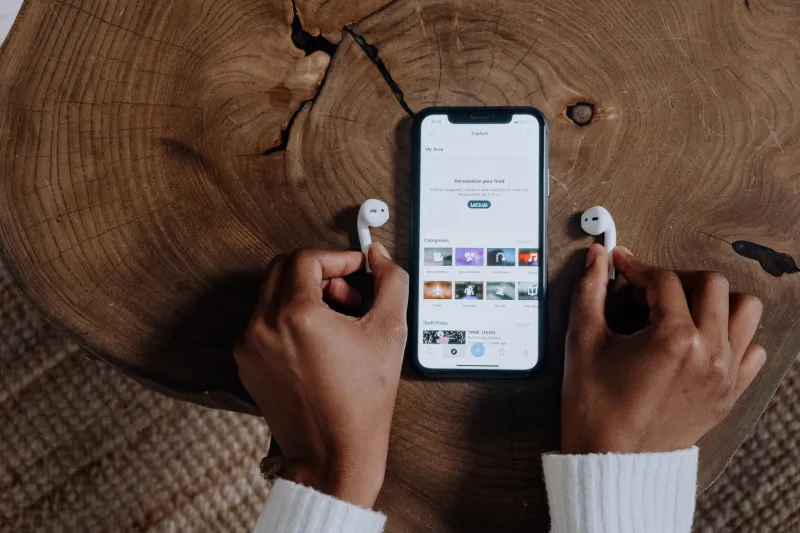
Somewhere on Spotify right now, there is a playlist called "songs that feel like fluorescent lights at 2am in a CVS but make that sound romantic." It has 47 songs and 12 followers and whoever made it has cracked something fundamental about the human experience that no standardized personality test has ever come close to capturing.
We have entered the era of the hyperspecific playlist. And it is, genuinely, one of the most interesting things happening in American internet culture right now.
The Death of the Mood Playlist and the Rise of the Scenario Playlist
For a long time, playlists were functional. You had "Workout Bangers." You had "Chill Vibes." You had "Road Trip" and "Study Session" and maybe, if you were feeling poetic, "Rainy Day." These were fine. These were useful. These were also about as revealing as listing "I enjoy laughing" on a dating profile.
Something shifted. The playlists got weirder. They got more specific. They started describing situations that no playlist had any business describing.
Songs for the walk from your car to your front door when you're not ready to go inside yet. Music that your cat would listen to if it had one (1) unresolved emotional issue. Slaps specifically in a Target bathroom at 3pm on a Tuesday.
These aren't mood playlists. They're scenario playlists — micro-narratives that describe a feeling so precisely that the very act of naming them is a form of art. Or at least a form of something. We're still workshopping the vocabulary.
Why Specificity Is the New Sincerity
There's a theory floating around in online spaces — articulated in tweets and Tumblr posts and Discord servers with varying degrees of coherence — that hyperspecificity has become the dominant mode of Gen Z and millennial emotional expression. The idea is this: broad statements of feeling have become suspect. Saying "I'm sad" is too vulnerable, too exposed. But saying "I made a playlist called songs for when you're watching someone else live the life you thought you'd have and you're not even mad, just a little winded" — that's a safe container for the same exact emotion.
The playlist title does the emotional heavy lifting. You don't have to explain. You just share the link.
Jamila, 26, from Atlanta, puts it this way: "My therapist asked me how I was doing and I genuinely considered just sending her my playlist called 'soft catastrophe hours.' It would have said everything."
She did not send the playlist. But she thought about it, which counts.
The Friend Group Playlist Curators: A Field Report
In the social ecosystem of most friend groups, there is usually one person who has been elevated — sometimes reluctantly, always correctly — to the role of Official Playlist Person. This is not a role anyone applies for. It is conferred by demonstrated excellence and an inability to stop making playlists at 1am.
Devin, 29, from Chicago, has held this role in his friend group for approximately six years. His most beloved playlist, according to his friends, is titled "songs for being the last person at the party who stayed to help clean up." It has 34 songs. Every single one, his friends report, is exactly right.
"It's not a sad playlist," Devin explains. "It's not a happy playlist. It's specifically the feeling of being tired but also feeling good about yourself. There are like four songs in the world that capture that and I found them all."
His friends share it every time the situation arises. The situation, they say, arises more than you'd think.
Over in Portland, a 24-year-old named Priya has gained minor local fame for a playlist she made called "music that smells like a library book from the 1970s." When asked to explain the sonic logic, she says: "You either get it or you don't, and if you don't, I can't help you." Fourteen people in her life, she reports, get it. She considers this a profound success.
The Playlist as Personality Infrastructure
Here is a thing that personality tests — Myers-Briggs, Enneagram, the Big Five, the one where you pick a beach and it tells you your attachment style — fundamentally cannot do: they cannot capture the version of you that exists at 11:45pm making a playlist called "songs for when you're proud of yourself in a quiet way." That person is real. That person is specific. That person has taste.
A playlist title, at its best, is a complete emotional sentence. It tells you what the person notices, what they find beautiful, what weird intersection of feeling and circumstance they've decided deserves its own soundtrack. That's more information than sixteen letters arranged in a sequence.
Not to be dramatic about it. But also: a little dramatic about it.
Marcus, 31, from Austin, made a playlist two years ago called "songs my dad would have liked if he'd had different taste." He has never shared it publicly. He says making it was one of the most useful things he's ever done with an hour of his time. "It's not really about the songs," he says. "It's about figuring out what I wanted from him that I never got. But like. In a Spotify way."
And there it is. The playlist as low-key grief processing, identity archaeology, creative expression, and social signal, all at once. The format contains multitudes.
The Titles We Have Encountered and Cannot Stop Thinking About
In the course of reporting this piece — which involved asking a lot of people to share their most embarrassing playlist titles — we collected the following, presented without further comment:
- "songs that are doing their best"
- "background music for being perceived"
- "songs that feel like getting a text back from someone you thought you'd never hear from again (not in a bad way)"
- "music for standing in your kitchen at midnight eating cereal and feeling like the main character of something small"
- "songs for the specific sadness of a really good Sunday afternoon ending"
Every single one of these is a complete emotional document. Every single one tells you more about its creator than a resume ever could.
Make the Playlist. Name It Honestly.
If you take nothing else from this: go name your playlists better. Not for us. Not for the algorithm. For yourself.
There is something clarifying about sitting down and finding the exact words for a feeling, then filling it with songs that prove the feeling is real. It's a tiny creative act. It costs nothing. It leaves evidence that you were a specific person who noticed specific things.
Which is, when you think about it, the whole project of being alive.