Spotify Wrapped Knows Exactly What Happened to You This Year and It Will Tell Everyone
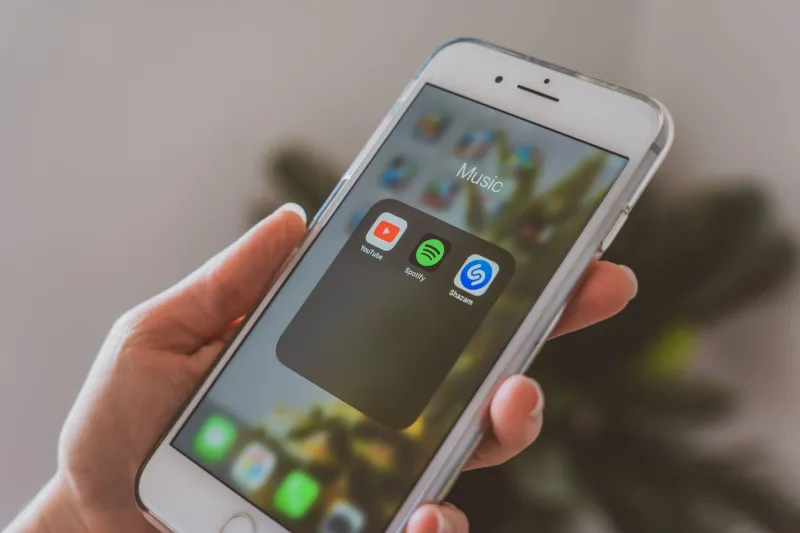
Therapy is expensive. Journaling requires discipline. Talking to your friends about your feelings means eventually having to listen to their feelings in return, which is a whole thing. But Spotify? Spotify has been quietly, obsessively documenting your entire emotional arc for twelve months, and every December it presents its findings in a pastel-colored slideshow you will immediately screenshot and post to your Instagram story without fully processing what you've just confessed to the internet.
I'm not here to shame you. I'm here because my Wrapped this year contained information about myself that I had been actively avoiding for approximately nine months, and I need to talk about it with someone. You're here now. Congratulations.
The Data Doesn't Care About Your Narrative
Here is the fundamental problem with Spotify Wrapped: it has no investment in the story you tell about yourself. You might describe your year as 'a period of personal growth and intentional transition.' Spotify will describe it as '847 plays of a song you associate with someone you claim you're over' and a genre shift in March that corresponds exactly with the week things went sideways.
The algorithm doesn't editorialize. It doesn't soften the data or reframe it in a more flattering light. It just counts. How many minutes. How many times. Which artists at which hours. And then it presents all of this information in a font that feels aggressively cheerful given what it's actually communicating.
My therapist, by contrast, is very good at helping me reframe things. 'That sounds like it was really difficult,' she says, and I feel heard. Spotify says: 'You listened to this song 114 times in a single month,' and I feel caught.
A Field Guide to What Your Listening Habits Actually Mean
After several years of Wrapped analysis — both personal and crowd-sourced from friends who sent me their results with the energy of people submitting evidence — I've developed a fairly reliable translation guide.
Your top artist is someone you haven't mentioned to anyone all year. This is the most revealing category. Not the artist you talk about. Not the one you recommend to people to seem interesting. The one you listened to alone, at volume, when you thought no one was watching. That's the real one. That's the whole year.
Your minutes-listened number is either shameful or a flex, and you know which one it is. There's a specific threshold — somewhere around 70,000 minutes — where the number stops being impressive and starts being a wellness concern. You know if you crossed it. Spotify knows. Everyone who sees your story will do the math.
The gap between your 'public' playlist and your most-played songs is a personality diagnostic. If your curated playlist is full of sophisticated indie folk and your Wrapped reveals you spent 40% of your listening time on early 2000s pop-punk, that gap is not a contradiction. That gap is you. The real you, the one who still has complicated feelings about a specific year of high school.
Your skip rate is your emotional stability score. Low skip rate? You're either very decisive or completely checked out. High skip rate? You're seeking something you can't name and rejecting everything that isn't it. Mid-range skip rate with spikes in certain months? Now we're getting somewhere. What happened in April? Something happened in April.
3 AM Is Its Own Genre and Spotify Has the Receipts
One of the features Wrapped has flirted with over the years is time-of-day listening data, and it is the most ruthlessly honest metric in the entire package. Because here's the thing: what you listen to at 3 AM is not what you listen to at noon. Noon music is functional. Noon music is podcasts and upbeat playlists you put on to feel productive. 3 AM music is the truth.
I know someone whose Wrapped revealed she had listened to a specific album — one she'd publicly declared 'mid' — exclusively between midnight and 4 AM for six straight weeks. She had, in daylight hours, maintained an entirely coherent position that this album was fine but not her thing. The data suggested otherwise. The data suggested it was very much her thing, specifically during the hours when she wasn't performing opinions for anyone.
We don't talk about what the 3 AM data means. We just screenshot it and move on. This is, I think, the healthiest approach.
Shuffle Patterns as Personality Types: A Mostly Serious Analysis
I want to propose something that I believe has genuine merit despite sounding unhinged: how you use shuffle is a personality indicator.
People who never use shuffle are control-oriented, probably have strong opinions about playlists as an art form, and are either very emotionally stable or the exact opposite — they need the predictability of a known sequence because other things feel chaotic. There's no middle ground here.
People who shuffle everything, always, and just let the algorithm decide? Chaotic neutral. Comfortable with uncertainty. Possibly avoidant. The kind of person who says 'I'm down for whatever' and genuinely means it, which is either very chill or a sign that they've stopped having preferences to protect themselves from disappointment.
Then there's the third type: people who shuffle but skip constantly, hunting for the exact right song without being able to name what that song is. This is the most emotionally complex listening behavior and also, based on my thoroughly unscientific survey of my own friend group, the most common. We are all, apparently, looking for something we can't articulate, cycling through options, rejecting everything that's almost right. The Spotify data just makes it visible.
What To Do With the Truth When It Arrives in a Slideshow
December Wrapped season has a specific emotional texture. There's the initial excitement — everyone loves data about themselves, it's practically a biological drive — followed by the moment of recognition, followed by the rapid decision about how much of this to share publicly versus quietly sit with.
My recommendation, developed through personal failure, is this: look at your Wrapped alone first. Give yourself a minute with it before you screenshot anything. Read the top artist and just... notice what you feel. Check the minutes and be honest about what that number represents. Look at the genre breakdown and acknowledge the gap between who you are at noon and who you are at 3 AM.
Then, if you want, post the fun parts. The high number. The unexpected artist that makes you seem interesting. The genre result that's technically accurate but framed in the most flattering possible way.
But you'll know what the full picture says. Spotify will know. And somewhere in a server farm, an algorithm will continue to listen, patiently, building next year's case.
It's fine. It's all fine. Put on a playlist and don't think about what the skip rate is about to reveal.