Meet Gerald, My Dying Pothos: A Definitive Guide to Naming Your Plants After People Who Did You Wrong
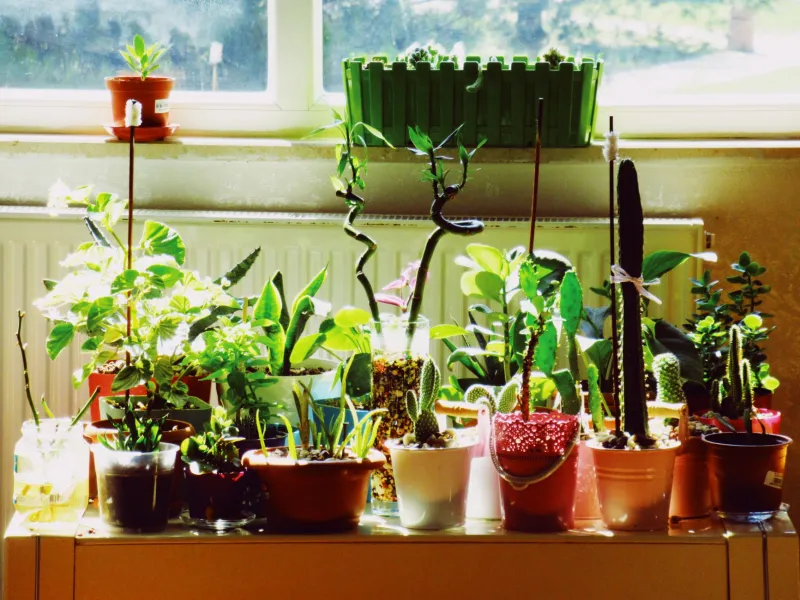
Gerald is struggling. His leaves are yellowing at the tips, he leans dramatically toward the window despite being placed directly in front of it, and no matter how much attention you give him, he always looks vaguely disappointed. Gerald is also the name of a man who once told someone he was "emotionally unavailable for the foreseeable future" via a text message that included a shrug emoji.
Coincidence? Absolutely not.
Across America, a quiet revolution is happening on windowsills, bathroom counters, and overstuffed IKEA bookshelves. People are naming their houseplants after exes, difficult coworkers, estranged family members, and that one friend who "forgot" to Venmo them back for the group dinner in 2019. And the results are, without exception, deeply unhinged and completely wonderful.
Why Your Monstera Deserves a Name That Means Something
Human beings have been anthropomorphizing objects since we drew animals on cave walls and decided rocks had personalities. But the modern houseplant naming phenomenon has a specific emotional texture that goes beyond just calling your succulent "Steve" because it's funny. (Though it is funny. Steve is a great succulent name.)
Psychologists who study attachment behavior note that assigning human identities to plants creates a low-stakes relationship — one where you can practice care, feel the sting of loss when something dies, and even work through unresolved feelings without the messy inconvenience of another person being involved. Your plant cannot ghost you. It cannot leave you on read. It cannot show up at your mutual friend's birthday party with someone new and act surprised to see you there.
What it can do is wilt dramatically right after you thought you'd finally figured out its watering schedule, which, honestly, tracks.
A Rogues' Gallery: Real Plant Names From Real People
We put out a call across our reader community asking for their best plant names and the stories behind them. The response was immediate, enthusiastic, and occasionally legally inadvisable to publish in full. Here are the highlights.
"Brittany," a spider plant (Portland, OR): "Brittany was my college roommate who used all my shampoo and never replaced it. The spider plant is incredibly prolific, keeps sending out little offshoots I didn't ask for, and takes up way more space than I originally anticipated. The name fits perfectly."
"Marcus," a cactus (Austin, TX): "Marcus is very prickly, requires almost no emotional labor from me, and somehow still manages to look good in any lighting. I water him once a month and he thrives. The real Marcus and I dated for two years and I'm still not sure he noticed."
"Linda from Accounting," a peace lily (Chicago, IL): "She blooms exactly once a year, very dramatically, and then acts like she deserves a standing ovation for the remaining eleven months. She is always slightly too cold."
"The Situation," a snake plant (Miami, FL): "It was 2021. I don't want to talk about it. The snake plant is resilient, difficult to kill, and somehow always upright even when everything around it is falling apart. We respect each other."
"My Mother-in-Law's Tongue" — wait, that's the actual botanical name (submitted by literally six different people): Multiple readers reported buying the plant specifically because of its common name and finding the experience "genuinely cathartic."
The Pettiness Is the Point
Here's the thing nobody tells you about naming your fiddle-leaf fig "Derek" after the guy who said he'd call and didn't: the act of caring for Derek anyway is quietly radical.
You water him. You dust his leaves. You move him three inches to the left because the afternoon light was stressing him out. You are, functionally, practicing grace toward something that bears the name of a person who didn't deserve it. Some plant owners report that this creates a strange, one-sided resolution — a way to keep showing up for something even when the original situation didn't work out.
Others report that when Derek finally dies (and fiddle-leaf figs will find a way to die, they are notoriously dramatic), there is a complicated grief that is maybe 40% about the plant.
Both experiences are valid. Both are a little bit unhinged. Welcome to Quolomo.
The Naming Ceremony: Taking It Seriously So You Don't Have To
Several dedicated plant-namers have developed what can only be described as rituals. One reader in Nashville describes a process that involves writing the name on a small clay tag, placing the plant in its new spot, and saying aloud, "You are named [Name] because [Reason], and I hope you do better." She reports that this feels "absurd and also genuinely moving, like a tiny funeral and a tiny christening at the same time."
Another reader simply writes the name on a sticky note, slaps it on the pot, and moves on with her life. "I don't need ceremony," she told us. "I need a rubber plant named Kevin and a place to put my feelings."
Both approaches are correct.
What Happens When They Die (And They Will Die)
The elephant in the room — or the elephant in the terracotta pot with the drainage hole you definitely remembered to use — is plant mortality. Houseplants die. Sometimes despite your best efforts, sometimes because of your worst ones, and sometimes for absolutely no discernible reason at all, which, again, tracks for certain people they may be named after.
Reader responses to plant death fell into two distinct camps. The first group described genuine, surprising sadness — a mourning that felt disproportionate to losing a fern but somehow exactly proportionate to everything the fern represented. The second group described something closer to catharsis. "When Bryce finally gave up the ghost," wrote one reader from Seattle, "I felt a door close very quietly. I repotted a new plant immediately and named her after myself. She's doing great."
That, right there, is the whole arc. The pettiness, the care, the loss, the renewal. Naming your plants after people who did you wrong isn't really about them at all. It's about practicing what it feels like to tend to something complicated and watch it either grow or go, and to be okay either way.
Gerald is still struggling, for what it's worth. But he's getting new soil this weekend and a spot with slightly better light. He didn't ask for any of this, and neither did we, but here we are, doing our best.
Some things never change.