Every Plant in My Apartment Has a Name, a Bloodline, and a Political Agenda
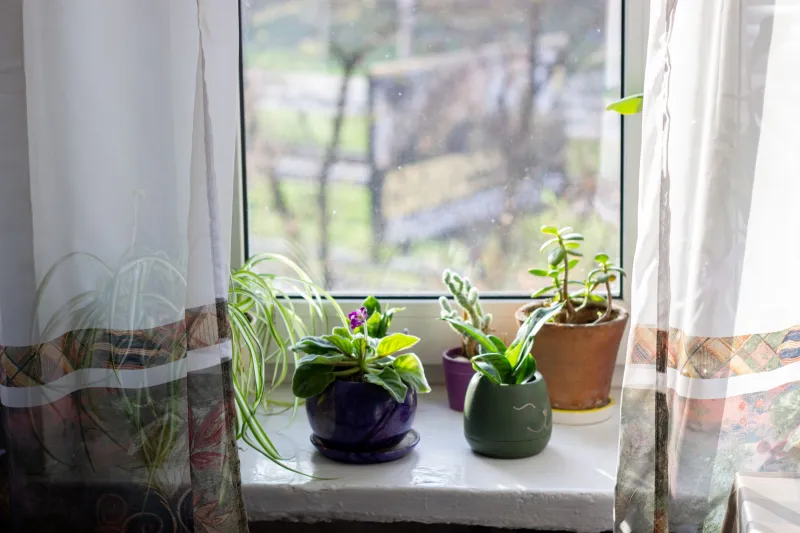
What started as buying a sad little succulent from a gas station clearance rack has somehow evolved into a fully operational alien civilization spanning fourteen pots, two windowsills, and one very confused IKEA shelf. My mom thinks I'm a botanist. She is not entirely wrong, but she is not entirely right either.
The technical term for what I do, I've decided, is applied mythology. The less charitable term, offered by my roommate after discovering a laminated chart taped inside a kitchen cabinet, is a lot.
It Began, As All Great Empires Do, With a Neglected Fern
The fern's name is Voleth. She is ancient. She predates the current political order by approximately six months, which in plant-civilization time means she is basically a geological epoch. Voleth arrived looking like something that had been through a war — because she had. She was the lone survivor of a three-pack from Trader Joe's, the other two having perished under the care of my previous self, who watered things based on vibes and nothing else.
Nursing Voleth back to health required research. Real research. YouTube tutorials, Reddit rabbit holes, a brief but sincere engagement with a Facebook group called Fern Fanatics Unite (active membership: 2,300 people who are doing fine, thanks). I learned about humidity trays. I learned about indirect light. I learned, crucially, that I had been dramatically underwatering everything for two years.
And somewhere in the middle of all that learning, I started giving Voleth a backstory.
Not a human backstory. An alien one. Specifically: Voleth is the last elder of the Kel'Veth, a species of sentient fern-beings who communicate through spore dispersal and govern through a council of fronds. She ended up in my apartment because her home planet — a lush, perpetually overcast world called Umbranis — was colonized by a neighboring succulent empire called the Dryathi.
The Dryathi, for the record, are represented in my collection by a cluster of echeverias on the south-facing windowsill. They are thriving. They require almost no attention. This tracks.
The Watering Schedule Is Also a Liturgical Calendar
Here's the thing about building a civilization in your houseplant collection: it accidentally makes you an excellent plant parent. Because now the watering schedule isn't just a reminder on your phone that you ignore — it's a sacred ritual. The weekly misting of Voleth's fronds is called the Remembering. The biweekly deep-water of the pothos (name: Sarreth, rank: High Diplomat, disposition: aggressively vining into everything) is called the Renewal.
I have a Google Doc. I know. I know.
The doc contains species hierarchies, which I will summarize briefly: the ferns and maidenhairs are the elder races, ancient and temperamental. The pothos and philodendrons are the diplomat class — adaptable, charismatic, slightly invasive. The succulents are the empire. The snake plants are the military. The one sad little cactus I bought at a farmers market and immediately forgot about is a hermit prophet who speaks only in drought.
The origin story for each plant is tied to how I actually acquired it, which is where the worldbuilding gets genuinely interesting. The monstera — Kaelthas, Grand Architect of the Upper Canopy — arrived as a cutting from a coworker who was moving to Portland. In the mythology, this is called the Great Diaspora. The ZZ plant I found abandoned outside an apartment building during trash pickup is a war refugee. His name is Drev. He has survived things I cannot imagine.
What This Is Actually Doing for My Brain
I want to be upfront: I was not doing great when the civilization started. It was the tail end of a particularly gray winter, the kind where you look up one day in February and realize you've watched the same three shows on rotation for six weeks and haven't spoken to a non-coworker human in eleven days. The plants were, at minimum, alive. They needed things. They responded — slowly, quietly — to being cared for.
Building the mythology gave the care a texture it didn't have before. Watering Voleth felt like tending to something that mattered. Repotting Sarreth into a bigger container felt like a diplomatic promotion. Propagating the pothos and distributing cuttings to friends became, in the lore, an act of peace-treaty exchange between civilizations.
Therapists call this narrative therapy — the idea that building stories around our experiences helps us process and find meaning in them. I call it making a laminated chart and taping it inside a kitchen cabinet, but the effect is similar.
My Mom Still Thinks I'm Going Through a Phase
She called last month while I was mid-way through writing Kaelthas's origin story (he was exiled from the Canopy Wars, obviously) and asked if I'd looked into getting a botany certification. I said I was considering it. This was a lie, but it was a kind one.
The truth is that the civilization isn't about plants, exactly. It's about the particular human need to make things meaningful — to look at a dying fern and decide that she is a survivor of an interplanetary conflict rather than just a plant you forgot to mist for three weeks. It's about finding a reason to pay attention, and then paying it so consistently that something actually grows.
Voleth put out three new fronds this spring. In the lore, this is a prophecy. In reality, it's because I finally bought a humidifier and stopped putting her near the heating vent.
Both things can be true. That's kind of the whole point.
Start Your Own Civilization (A Practical Guide)
If you want to try this — and you should, it's extremely good for your mental health and only mildly embarrassing — here's where to begin:
Pick one plant and give it a problem. Not a human problem. An alien problem. A political exile. A lost heir. A prophet who has seen too much. Let the problem inform how you care for it.
Let the acquisition story be the origin story. Where did you get it? A grocery store clearance shelf is a refugee camp. A friend's cutting is a diaspora. A farmers market impulse buy is a wandering mystic.
Build the world around the care requirements. A plant that needs high humidity lives in a rainforest civilization. A succulent that thrives on neglect is an empire built on austerity. A fussy maidenhair that needs constant attention is a dying aristocracy. The biology writes the politics.
Get a laminated chart. I cannot stress this enough.
Voleth is watching me type this. She looks, as always, ancient and slightly judgmental. The new frond is unfurling slowly, pale green and improbable.
She's going to be fine. We both are.